



.svg)
.svg)
.svg)
.svg)
.svg)

.svg)

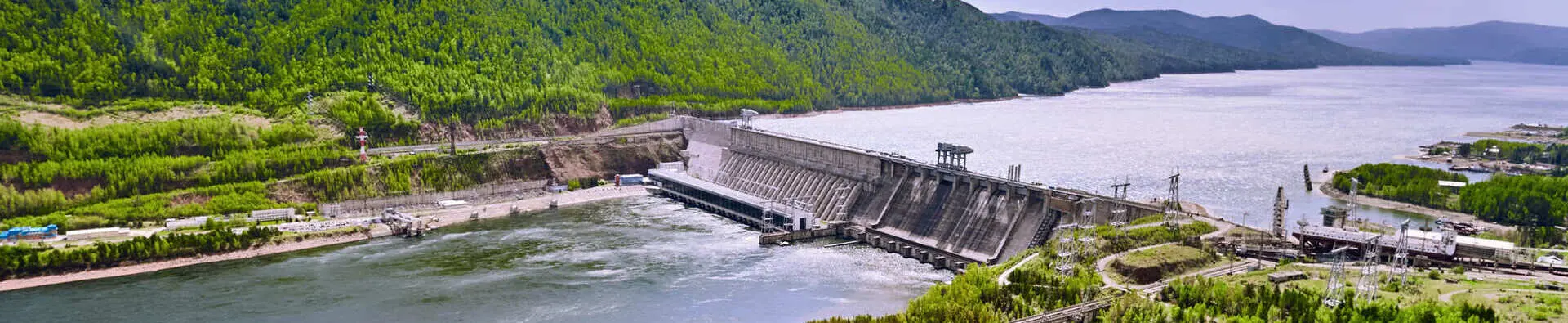


The mighty Yenisei, which separates Khakassia and Krasnoyarsk Krai, is the most abundant river in Russia. Everything here – both nature and human-made creations – amazes with its power and grandeur. In the upper reaches of the river, relatively close to Abakan, is Russia's largest hydroelectric power station, the upper stage of the Yenisei hydroelectric cascade.
Sayano-Shushenskaya Hydroelectric Power Station
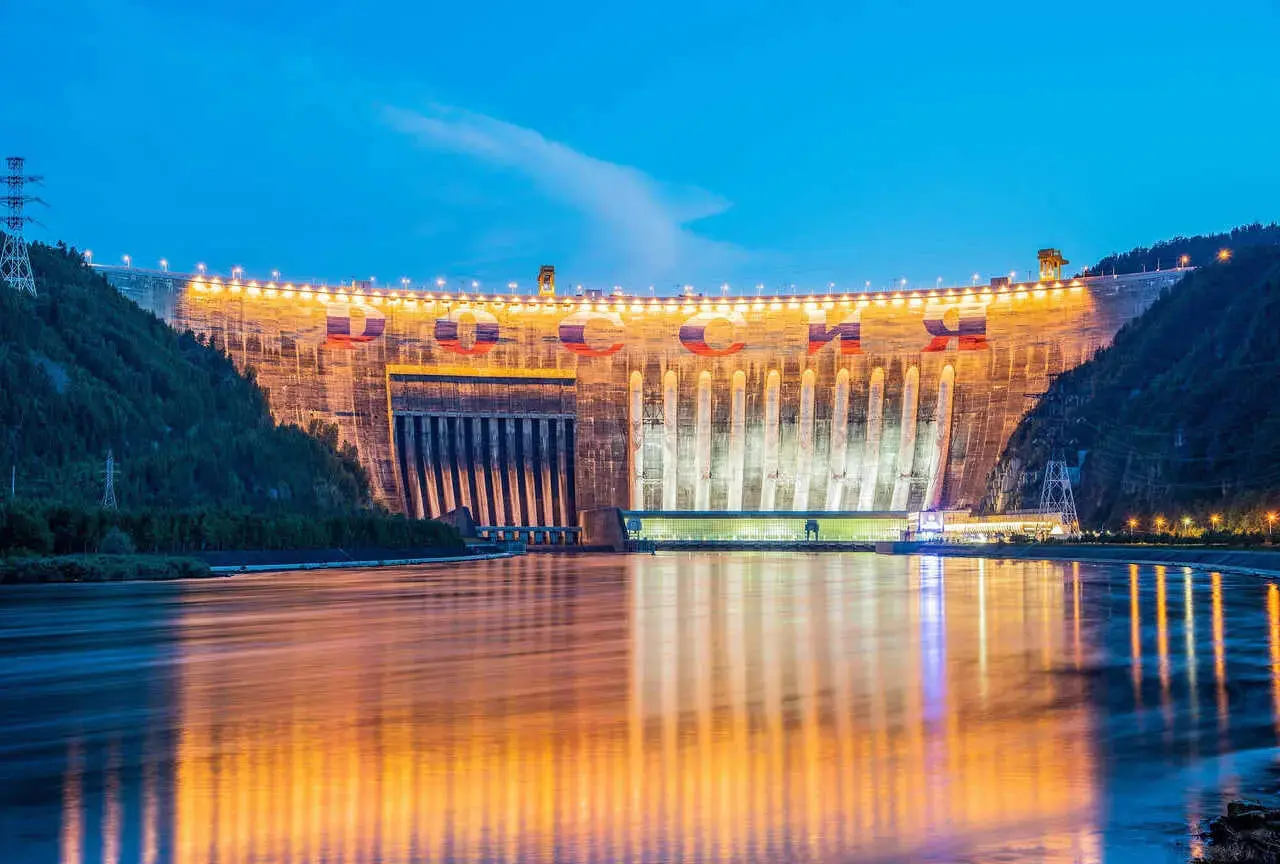
Construction of the station lasted over 30 years; it was launched in 2000. The Sayano-Shushenskaya Hydroelectric Power Station dam The tallest in Russia, 245 meters. In 2020, in honor of Russia Day, it was decorated with a huge inscription. Today, it is the largest graffiti in the country, its height is 52 meters, and its length is more than half a kilometer.
A breathtaking view of the dam opens from the observation deck in front of the turbine hall, open to the public. A monument to the "Conquerors of the Yenisei" is also located here. However, a tour of the dam crest and the station grounds is only possible with a guided tour conducted by RusHydro specialists. To do this, you must submit a request in advance on the website. You can also visit the Hydropower Museum, which is located next to the hydroelectric power plant in the village of Cheryomushki, in the RusHydro training and production center, by appointment. The interactive exhibition will allow you to learn many interesting things not only about the Sayano-Shushenskaya HPP, but also about hydroelectric power plants and electricity in general. In the museum halls, you can "build" a hydroelectric power plant yourself, as well as conduct visual physics experiments.
Shushenskoye
Downstream, on the right bank of the Yenisei River, at the confluence of the Shush River, lies the village of Shushenskoye, founded by Cossacks in the mid-18th century. This area once served as a place of exile. Decembrists and participants in the Polish uprising lived here, and the most famous exile was Vladimir Lenin, who wrote the book "The Development of Capitalism in Russia" here, which is still referenced by economists around the world. To commemorate the centenary of his birth in 1970, a museum-reserve was opened in Shushenskoye, which later became a historical-ethnographic museum. Today, you can see what life was like in a Siberian village at the turn of the 19th and 20th centuries. Everything here is alive and real: houses with barns, bathhouses and wells, and vegetable gardens where not only the usual potatoes grow, but also flax, from which they wove fabric, and tobacco, brought here by the Decembrists.
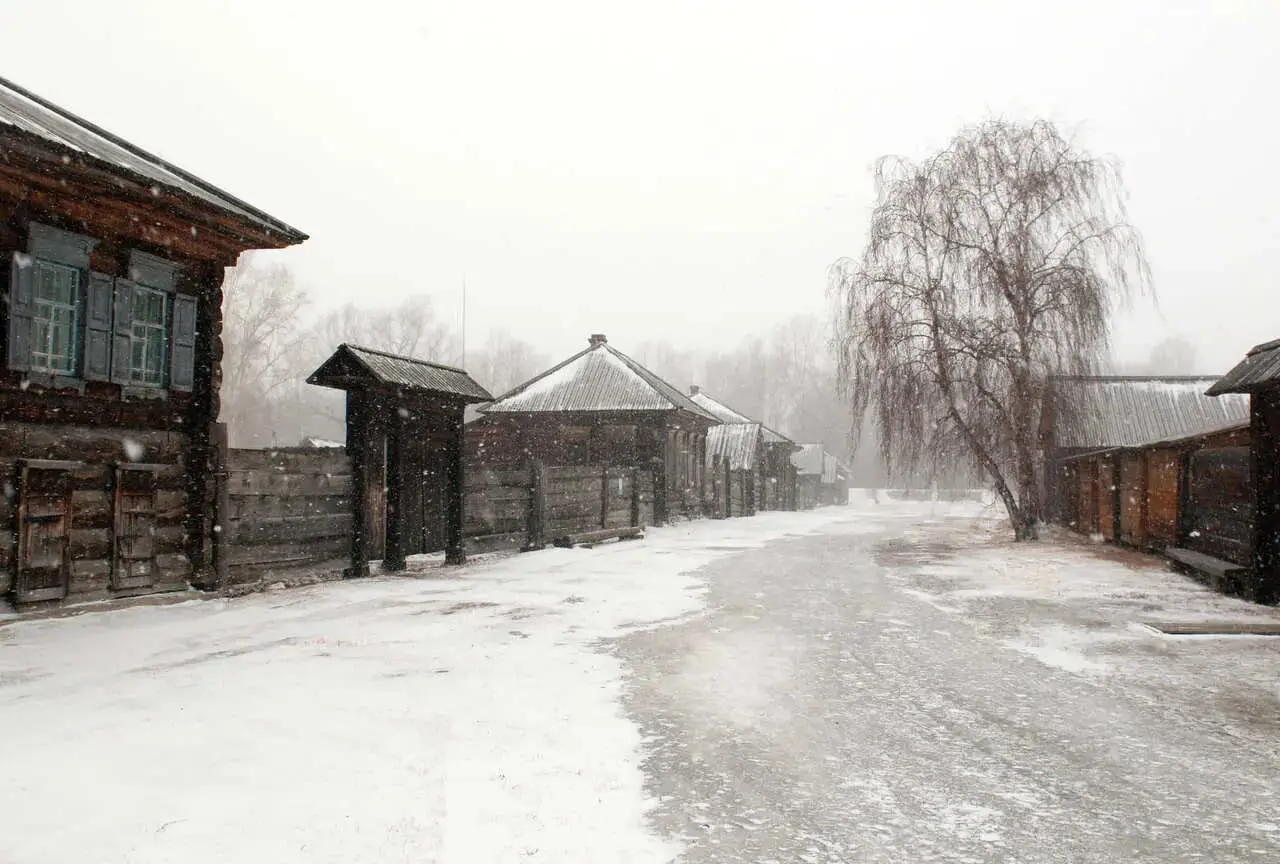
The museum's staff not only teaches about ancient crafts but also revives traditions. There are pottery, cooperage, and other workshops, as well as a folklore ensemble and an ethnographic theater. Every summer, Shushenskoye has hosted the International Festival of Ethnic Music and Crafts "WORLD of Siberia" for over 20 years. Craftsmen and performers gather here not only from various cities across Russia, but also from Belarus, Uzbekistan, Algeria, Armenia, Georgia, China, Cuba, Serbia, France, and other countries.
Shushensky Bor National Park
On the right bank of the Yenisei River is also the Shushensky Bor National Park, covering an area of over 39,000 hectares. The flat section – a pine forest on sand dunes once washed up by the Yenisei River – is located near the village of Shushenskoye. The Visiting Berendey arboretum is also located here, where you can see plants from various corners of the world: China, Mongolia, Japan, and North Africa.
The mountain section of the park stretches on the slope of the Western Sayan Mountains, not far from the Sayano-Shushenskaya Hydroelectric Power Station and the village of Cheryomushki. Here you can climb to the observation deck with a view of the river and mountains, or to a waterfall, and if you have the strength and time, then to one of the peaks of the Borus ridge, although this is not a one-day trip. And although the right bank of the Yenisei administratively belongs to the Krasnoyarsk Territory, and not to Khakassia, it is very close to Abakan and is definitely worth a visit.