




.svg)
.svg)
.svg)
.svg)
.svg)

.svg)

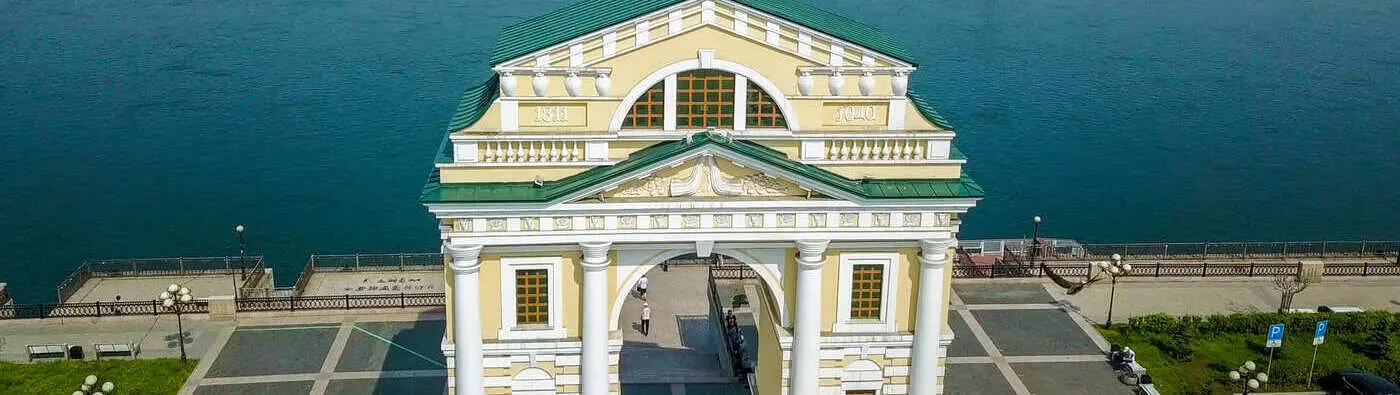


The history of Irkutsk began in 1661, when, by order of the Yeniseisk governor, the Cossack Yakov Pokhabov established a fort on the right bank of the Angara, opposite the mouth of the Irkut River. Today, the Nizhnyaya Embankment, the city's oldest street, runs here. After a major renovation for Irkutsk's 350th anniversary, it was transformed into a two-level promenade, a pleasant place to stroll, admiring the river's beauty and historical monuments.
During the renovation, the Moscow Gate — a 19-meter triumphal arch built in 1811–1813 to commemorate the 10th anniversary of Alexander I's accession to the throne and dismantled during the Soviet period after it had fallen into disrepair—was also restored. Today, it is once again one of Irkutsk's symbols.
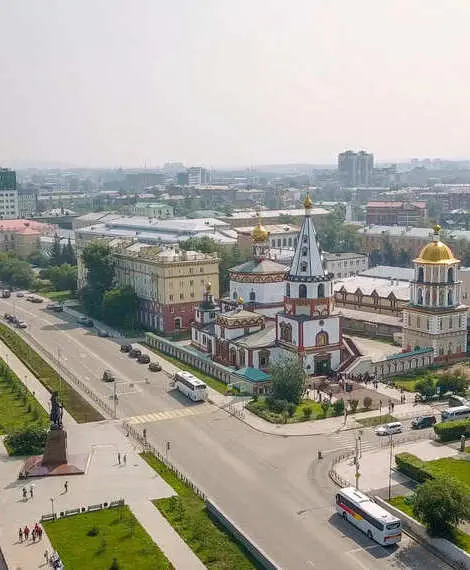
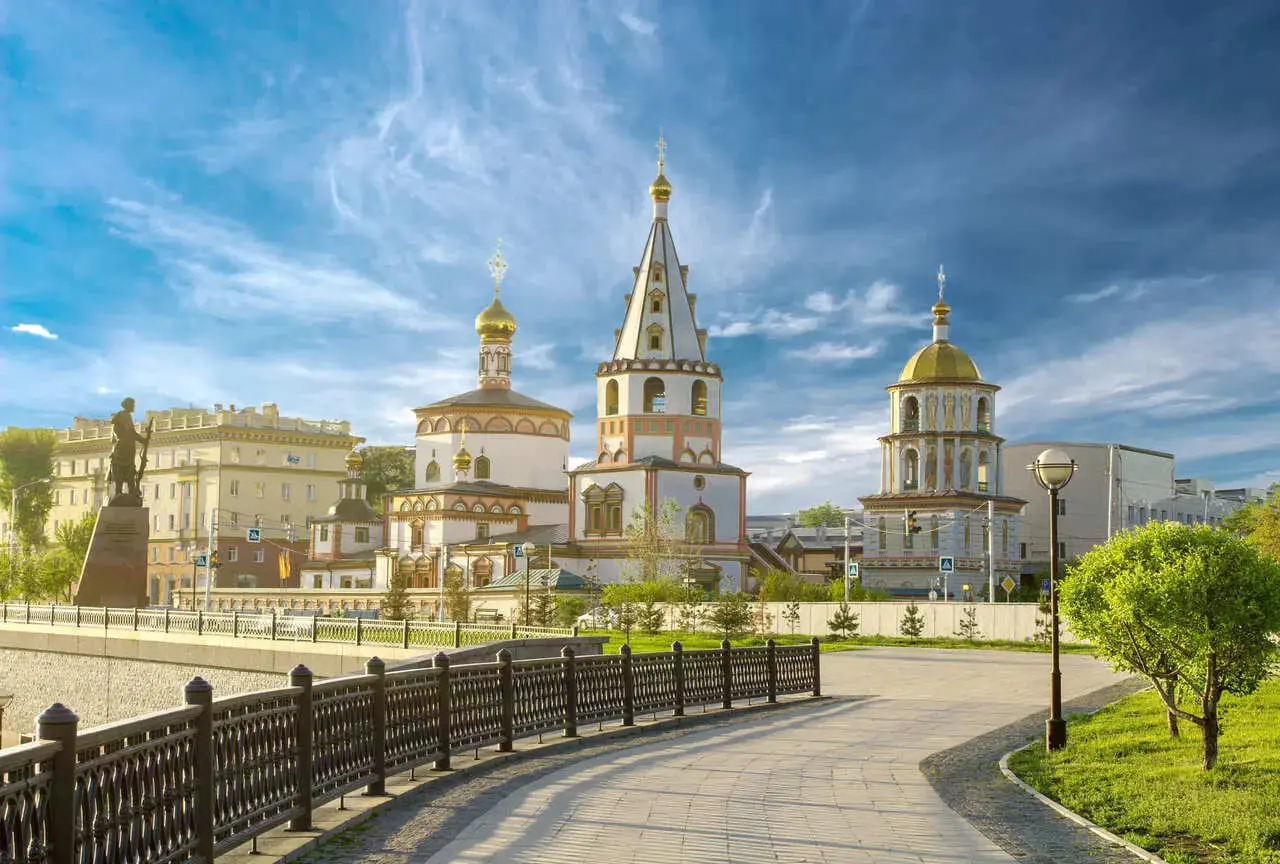
The embankment's appearance is complemented by modern monuments to surveyors, a teacher (or rather, a teacher), and a monument to the founders of Irkutsk. It stands near the Cathedral of the Epiphany, one of the most beautiful churches in Irkutsk. The cathedral was built in the early 18th century and is the second oldest church in the city. It suffered two earthquakes, and during Soviet times it housed a bakery's confectionery department. Today, however, it once again delights with its ornate decoration, unique tiles, frescoes, and paintings.
Church of the Savior
Nearby, in the square near the Eternal Flame, stands the oldest church in Irkutsk – the Church of the Savior Not Made by Hands, the only surviving building of the Irkutsk prison. Founded in 1706, it was the first stone building in the city. Unique exterior paintings from the early 19th century have been preserved on the eastern and southern facades of the snow-white church. Along the eastern wall is a crypt containing the remains of Irkutsk's first settlers, discovered during excavations near the church in 2006. Above the crypt is a granite monument with a bas-relief depicting the Irkutsk prison.
Roman Catholic Church
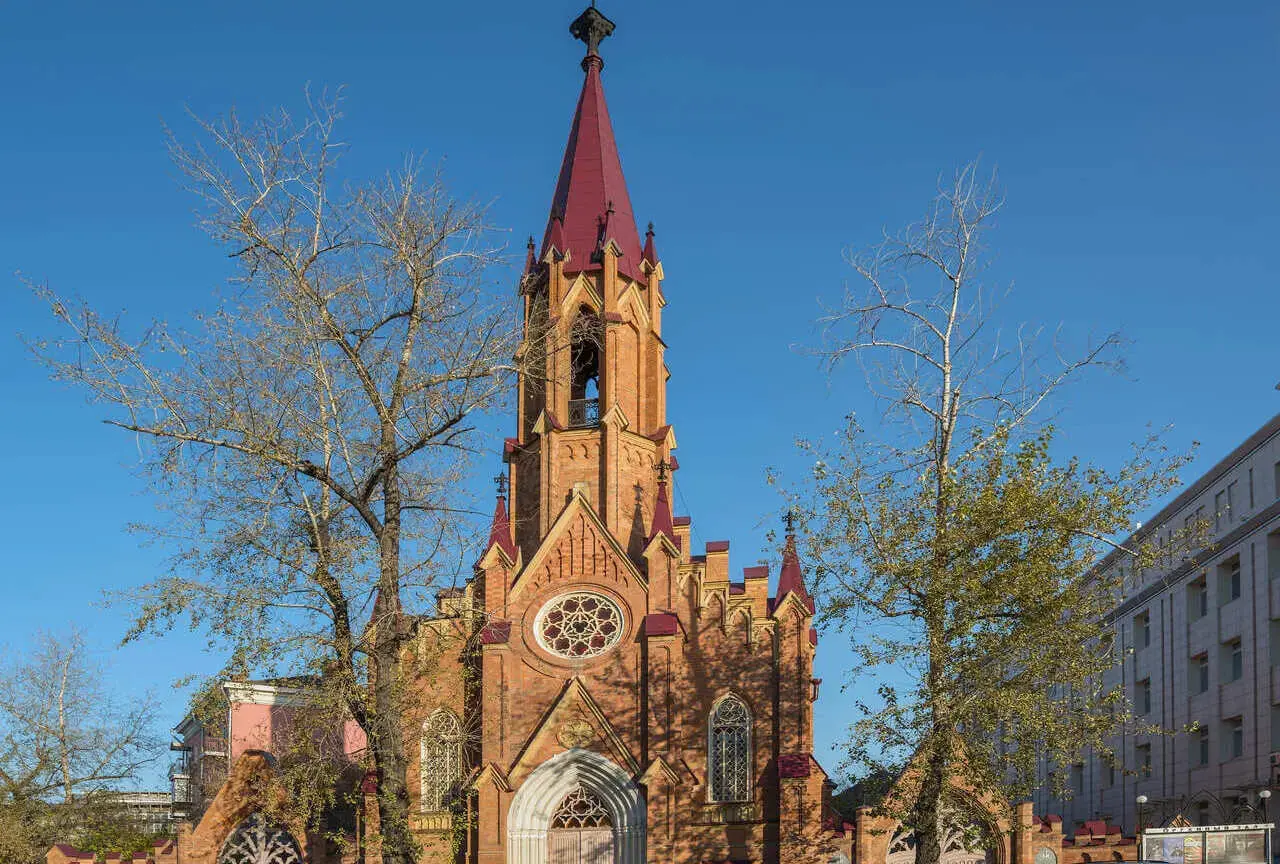
The Roman Catholic Church of the Assumption of the Blessed Virgin Mary, a remarkable monument of Gothic architecture, was built in 1884. It is commonly known as the Polish Church, as its construction was carried out by the Polish community. Among the Catholics here were Lithuanians, French, Italians, and Germans, but the majority were Poles – participants in the uprisings of the 18th and 19th centuries. It is no coincidence that one of the streets near the church is named after the Polish insurgents. The building miraculously survived the Soviet era and housed the East Siberian Newsreel Studio. In 1978, after restoration, the former church was intended to be used as a museum of the history of Poles in Siberia, but then it was decided to convert it into an organ hall for the Irkutsk Regional Philharmonic. The concert organ, made by the German firm Alexander Schuke, specially designed for Irkutsk, is now considered one of the ten best organs in Russia. The first floor of the cathedral houses a functioning chapel, where liturgy is celebrated daily. In Poland, the church is included in the list of Polish cultural heritage.
Kirov Square
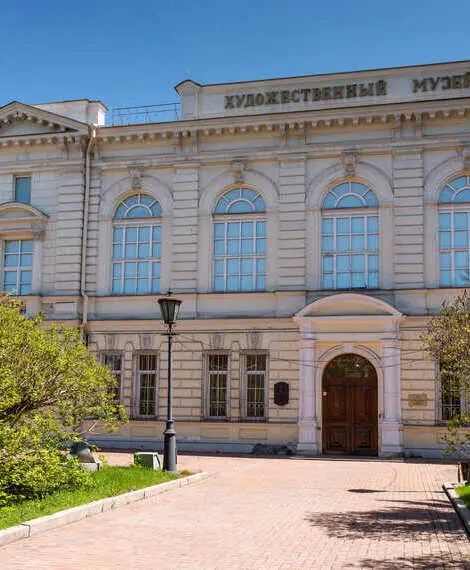
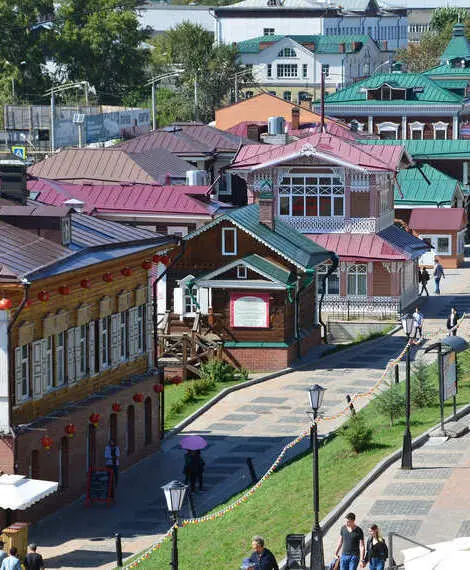
Kirov Square is the city's main square, hosting all the most important and large-scale events. In the center, near the fountain, the city's main Christmas tree is erected in winter. Over the past hundred years, the square and its surroundings have undergone many changes: churches have been destroyed, new buildings have been erected. A bronze model installed in the square will help you imagine what central Irkutsk looked like at the dawn of the 20th century. Walking around the city center, you can also explore Irkutsk Sloboda, visit the local history and art museums, and see the icebreaker "Angara".