





.svg)
.svg)
.svg)
.svg)
.svg)

.svg)

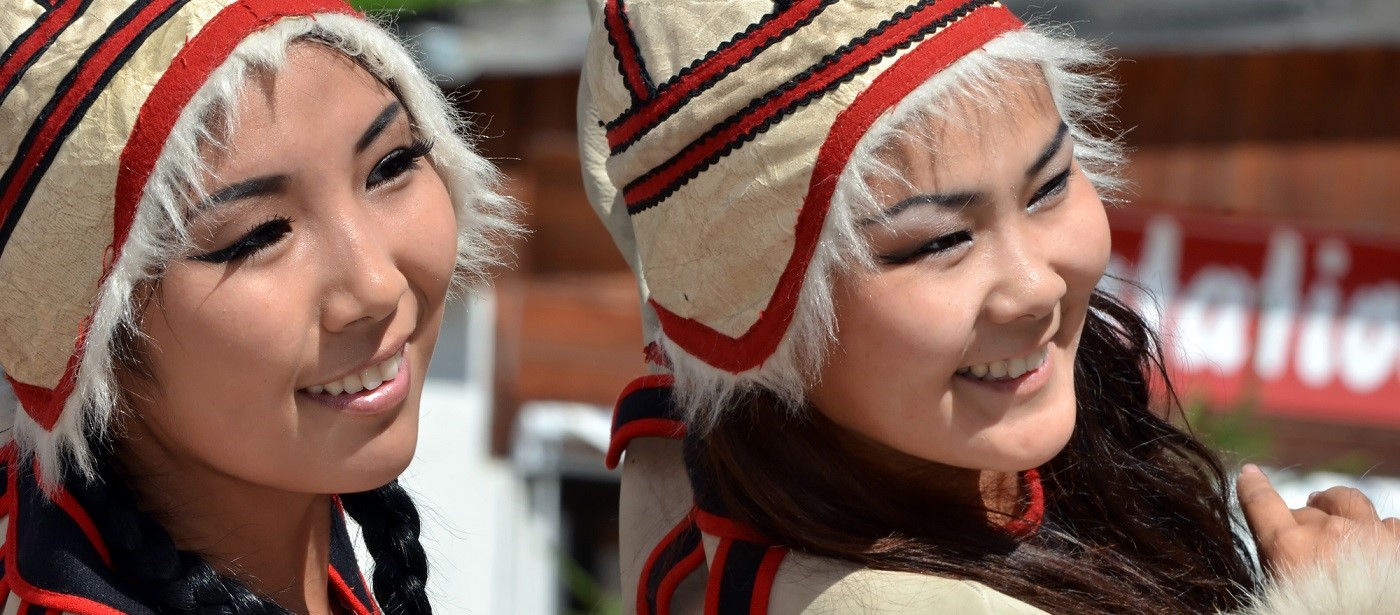


The word "ysyakh" can be literally translated from Yakut as "abundance". Ysyakh, associated with the pagan cult of fertility and solar deities, is one of the calendar folk holidays and is timed to coincide with the summer solstice on June 21.
In recent years, Ysyakh has gained immense popularity and has become, in fact, the main national holiday in Yakutia. Festive celebrations are held from June 10 to June 25, depending on the specific ulus, weekend schedule, etc.
This year, events on the occasion of Ysyakh will be held on June 24-25 in the Us Khatyn area. Here is a large architectural and ethnographic complex, built specifically to meet the main summer holiday. On a vast territory there are reconstructions of traditional Yakut wooden buildings that had a sacred meaning.
The most important symbol of the holiday – ritual hitching post-serge. It is believed that on this day the solar deities descend to earth on fiery horses, which are tied to the serge. Especially for Ysyakh, Yakut carvers cover the hitching post with beautiful patterns and decorate the post itself with bright multi-colored ribbons.
Horse for Yakuts – a special animal, sung in legends and the national epic Olonkho. Yysakh even includes a special ceremony dedicated to the patron saint of horses and other domestic animals – Dzhesegey. The program of the holiday certainly includes horse races, equestrian competitions, as well as a review competition of traditional horse harness.
Horse milk drink – koumiss – considered a symbol of abundance and prosperity. The celebration of Ysyakh opens with an ancient ritual of sprinkling earth and fire with koumiss, so that the deities would bestow their blessings on people. Then all the participants of the holiday take turns drinking koumiss from the sacred vessel – Choorona.
The culmination of the holiday – round dance Osuokhay, known since ancient times as part of the magical ritual of worshiping the Sun. Thousands of people, holding hands, slowly move clockwise around the sacred hitching post, forming a giant disk. In 2012, the festive dance, which brought together more than 15,000 people, was even included in the Guinness Book of Records. Osuohai symbolizes not only the Sun, but also the unity of people, as well as the continuation of the life cycle after a long cold winter.

The bright colorful holiday Ysyakh – a great opportunity to discover unexplored Yakutia by taking a trip to one of the most interesting and unusual regions of Russia. The amazing nature of the harsh northern region is most picturesque during the short, long-awaited summer.
AZIMUT Hotel Yakutsk is located in the very center of the Yakut capital. Here you can comfortably stay while traveling, and in the restaurantof the – taste traditional national cuisine.


