




.svg)
.svg)
.svg)
.svg)
.svg)

.svg)

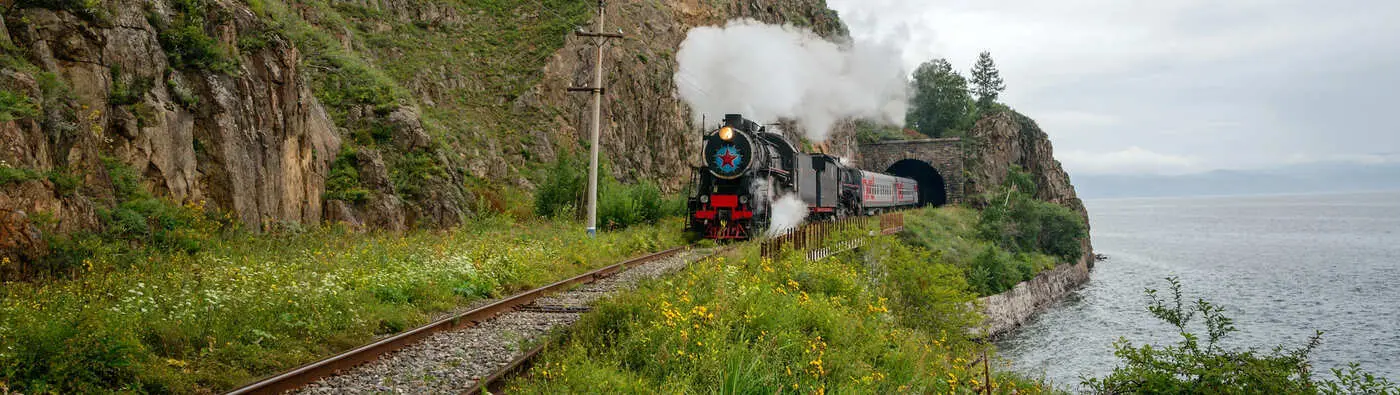


The Circum-Baikal Railway is the most beautiful in Russia and, according to Forbes magazine, one of the most beautiful in the world. Built in the early 20th century, it ran along the very shore of Lake Baikal and connected two sections of the Trans-Siberian Railway. But it was nicknamed the "golden buckle of Russia's steel belt" not for its beauty, but for its incredible cost. Laying tracks on a narrow ledge between the sheer walls of the Olkhinskoye Plateau and the waves of the Sacred Sea required literally cutting through ridges and gnawing into rocks, so over a section of 89 kilometers, 39 tunnels were dug, 18 galleries, 248 bridges, and 268 retaining walls were erected. This road was desperately needed; it was built in just a few years and was actively used for almost half a century. However, despite all the engineering efforts, landslides were frequent here, so in 1949 a duplicate line was opened from Irkutsk to Slyudyanka via the Olkhinskoye Plateau. This option had been proposed earlier, but at that time the locomotives were not yet capable of handling the steep climbs on this section. After this, the Irkutsk-Baikal-Slyudyanka line lost its significance, the tracks from Irkutsk to Baikal station were dismantled, and after the construction of the Irkutsk Hydroelectric Power Station, the section was flooded by the waters of the Irkutsk Reservoir. Today, the surviving and now dead-end line between Baikal and Slyudyanka II stations (72nd - 161st km from Irkutsk-Sortirovochny) is called the Circum-Baikal Railway (CBZhD).
Port Baikal
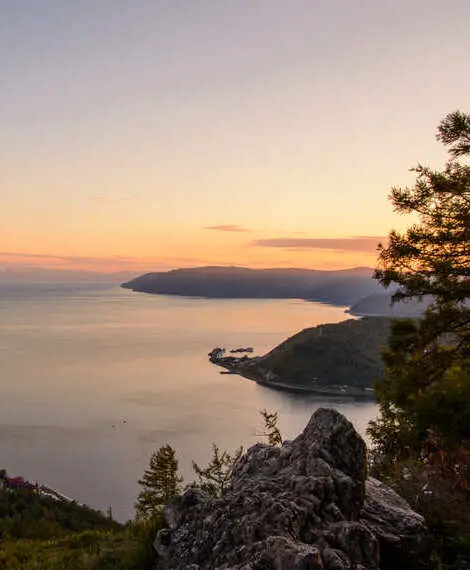
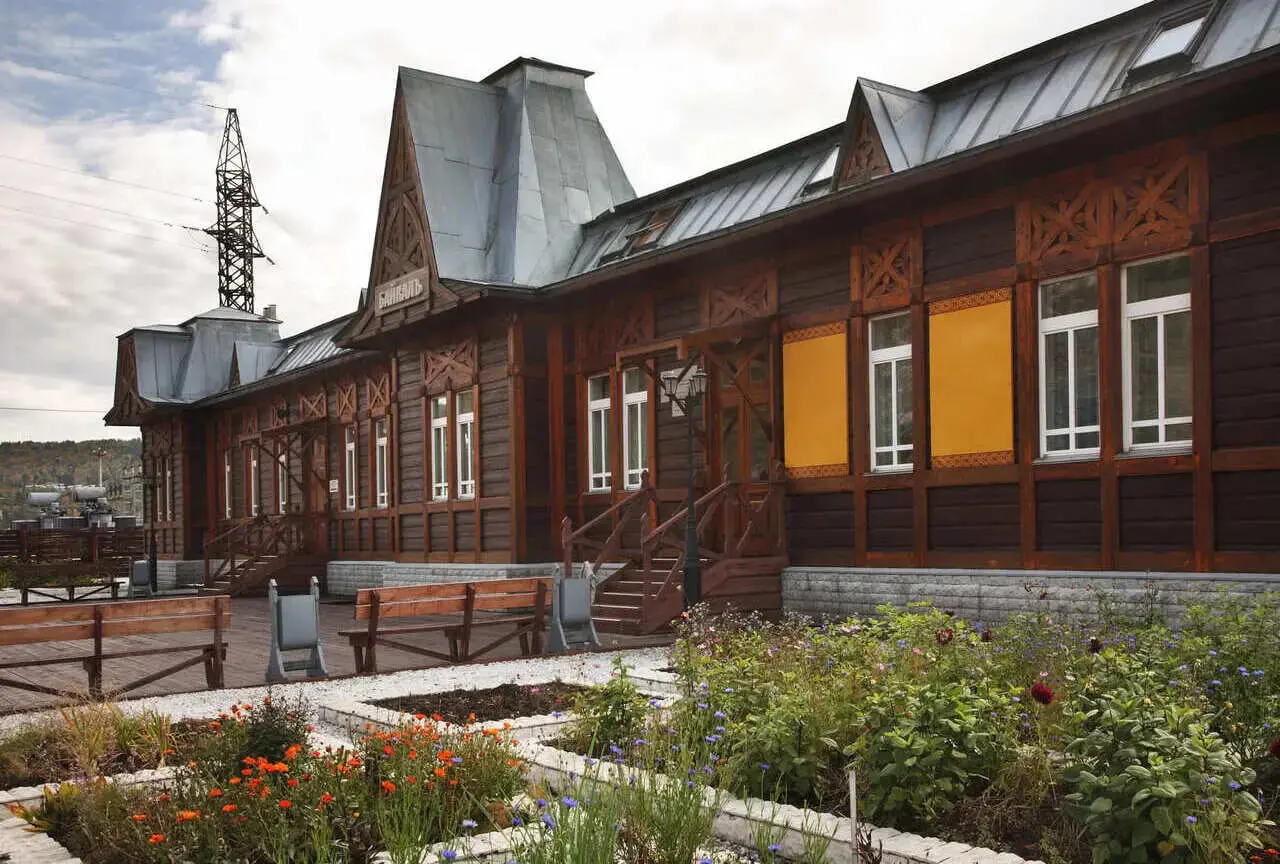
The village of Baikal at the source of the Angara River arose when it became necessary to connect the western and eastern sections of the Trans-Siberian Railway. Since 1900, it has served as a crossing point to the eastern shore of Lake Baikal, to the stations of Mishikha, Tankhoy, and Mysovaya. The icebreakers Baikal and Angara, specially ordered from England for this purpose, transported cargo and passengers in approximately 2.5 hours. At the height of winter, when the icebreakers were no longer able to navigate the route, they were replaced by horses, which pulled the cars along rails laid directly on the ice. The history of the Baikal port and station is told at the Museum of the Circum-Baikal Railway, housed in the station building. Nearby is an observation deck at the famous Stone of Love, or Stone of Wishes, with views of the port, station, village, and, of course, the lake. A little higher up is an ancient lighthouse, which was erected in the early 20th century and served until 1984. And at the highest point of the village, which also offers a magnificent panorama, is the beautiful wooden Church of the Transfiguration of the Lord, built in 2011.
Slyudyanka
The future city of Slyudyanka was founded with the beginning of construction of the Circum-Baikal Railway on the site of the Slyudyanka winter camp, which had existed there since 1802 for mica mining. The area is known as a natural mineralogical museum. More than 250 different minerals have been discovered and described in the Slyudyanka district. You can see the riches of Lake Baikal's mineral wealth with your own eyes at the unique V. A. Zhigalov Museum "Gems of Baikal," as well as at the interactive museum located in the Slyudyanka railway station building. This station is one of the most beautiful on the Trans-Siberian Railway. It is built in the Siberian Baroque style from local white and pink marble and serves as a unique monument to the builders of the Circum-Baikal Railway.
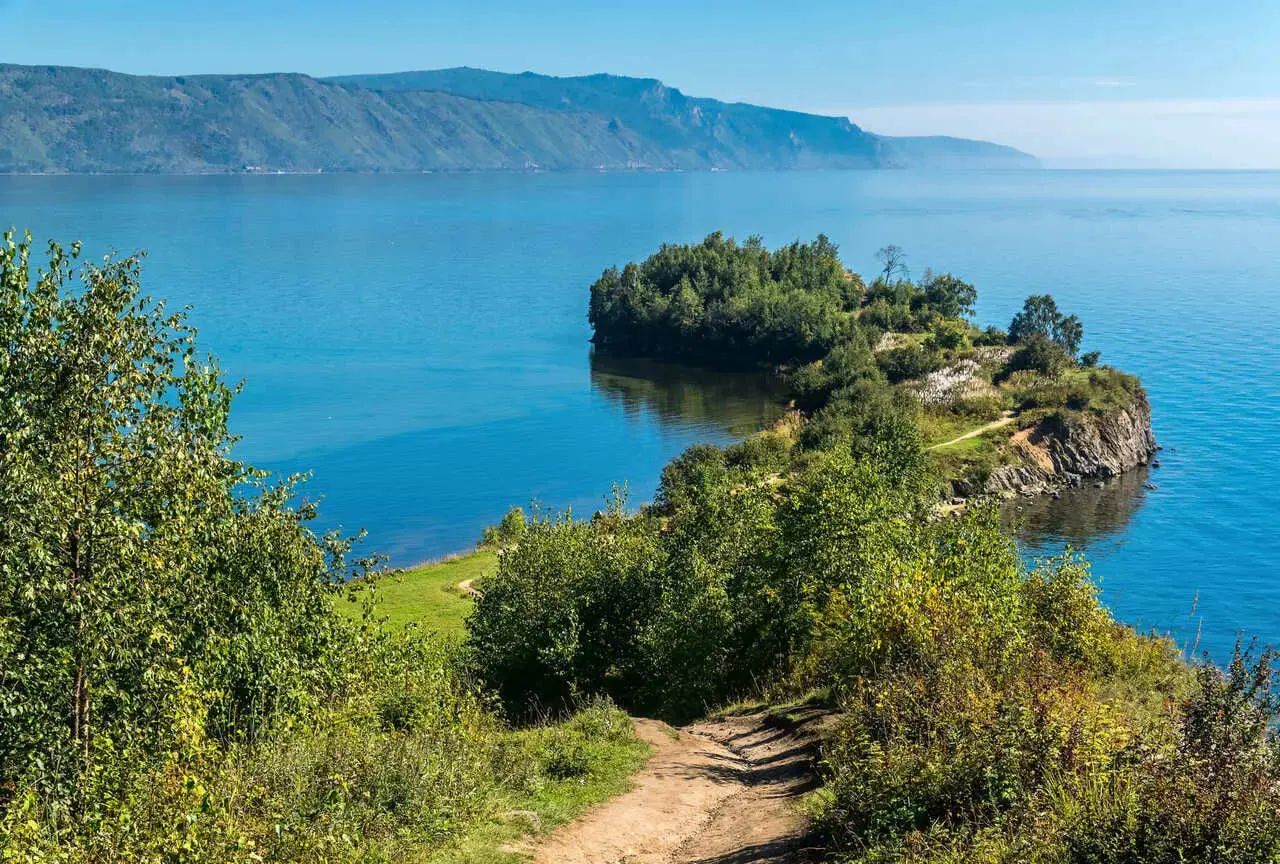
The city's surroundings boast numerous natural attractions. The "Going to the Peak" ecological trail, which runs along the Slyudyanka River, where the popular route to Chersky Peak passes, leads past a spring with "silver water" to a forest clearing with a picturesque view of the Khamar-Daban foothills.
Between Slyudyanka I and Slyudyanka II stations, there is a sandy beach, a lake with water lilies, and the famous Shaman Cape – a cult site that is still considered sacred to this day. The cape is the top of the ridge of one of the spurs of the Khamar-Daban and juts out into Lake Baikal for almost half a kilometer in the middle of the Kultuk Bay, and at the end of summer, when the water level in the lake rises, it turns into an island. Archaeologists have discovered several Bronze Age sites and ancient petroglyphs here.
You can visit the Circum-Baikal Railway and admire the picturesque landscapes and engineering marvels in several ways: on foot, by boat, or by tourist or commuter train.
While traveling around Lake Baikal, be sure to also visit Olkhon and Listvyanka, and if time permits, admire the amazing nature Buryatia.