




.svg)
.svg)
.svg)
.svg)
.svg)

.svg)

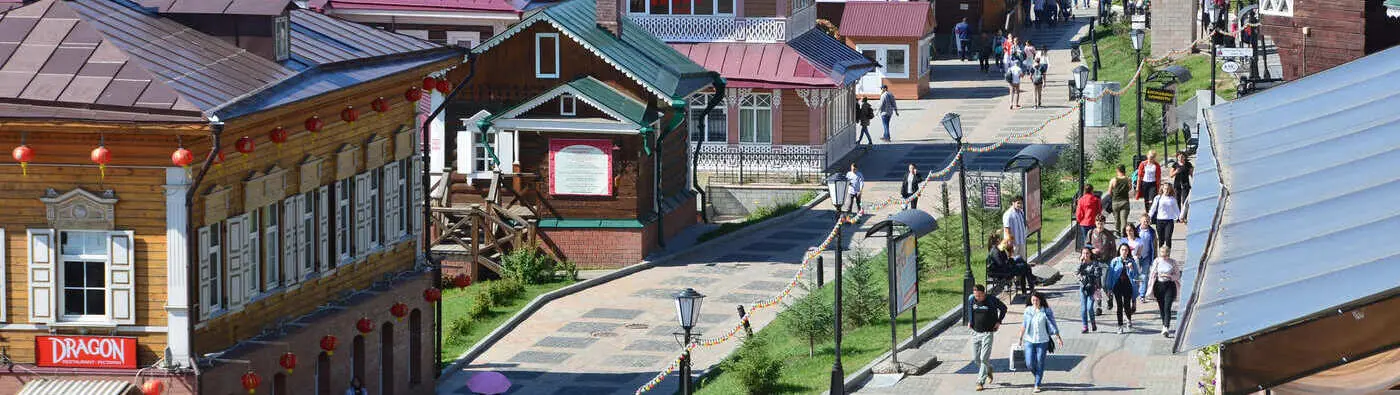


The 130th Quarter, which has become a tourist mecca, is located in the southern part of Irkutsk's historic center and forms a triangle bounded by Sedova, Timiryazeva, 3rd July, and Kozhova Streets.
At the end of the 18th century, a small village stood here. Later, it became part of the city limits, and two-story mansions with attics and balconies appeared here, their gates and wickets richly decorated with carvings and decorative trim. Most of the houses were wooden, with ornate shutters and window frames. However, much of this splendor was lost over time.
For the city's 350th anniversary, celebrated in 2011, this pocket of old Irkutsk was radically transformed. All dilapidated buildings were removed, buildings of historical value were restored or recreated based on archival documents, and several houses were relocated from other streets. Thus emerged the elegant Irkutsk Sloboda, with museums, shops, souvenir stalls, blacksmith and pottery workshops, art galleries, cafes, and restaurants.
One of the wooden mansions houses the "Window to Asia" museum, a branch of the regional museum of local history, where you can learn a lot about the history of the exploration of Siberia and the important role Irkutsk played in it. You can appreciate the richness of the local mineral resources and purchase unique items made from Siberian stones and minerals in the "Charoite Room," a store displaying truly museum-quality exhibits. The restored historic estate houses the "Craftsmen's Farmstead" branch of the Irkutsk Regional House of Folk Art. Here you can learn about the decorative and applied arts traditions of the Angara region's residents and even master a few folk crafts.
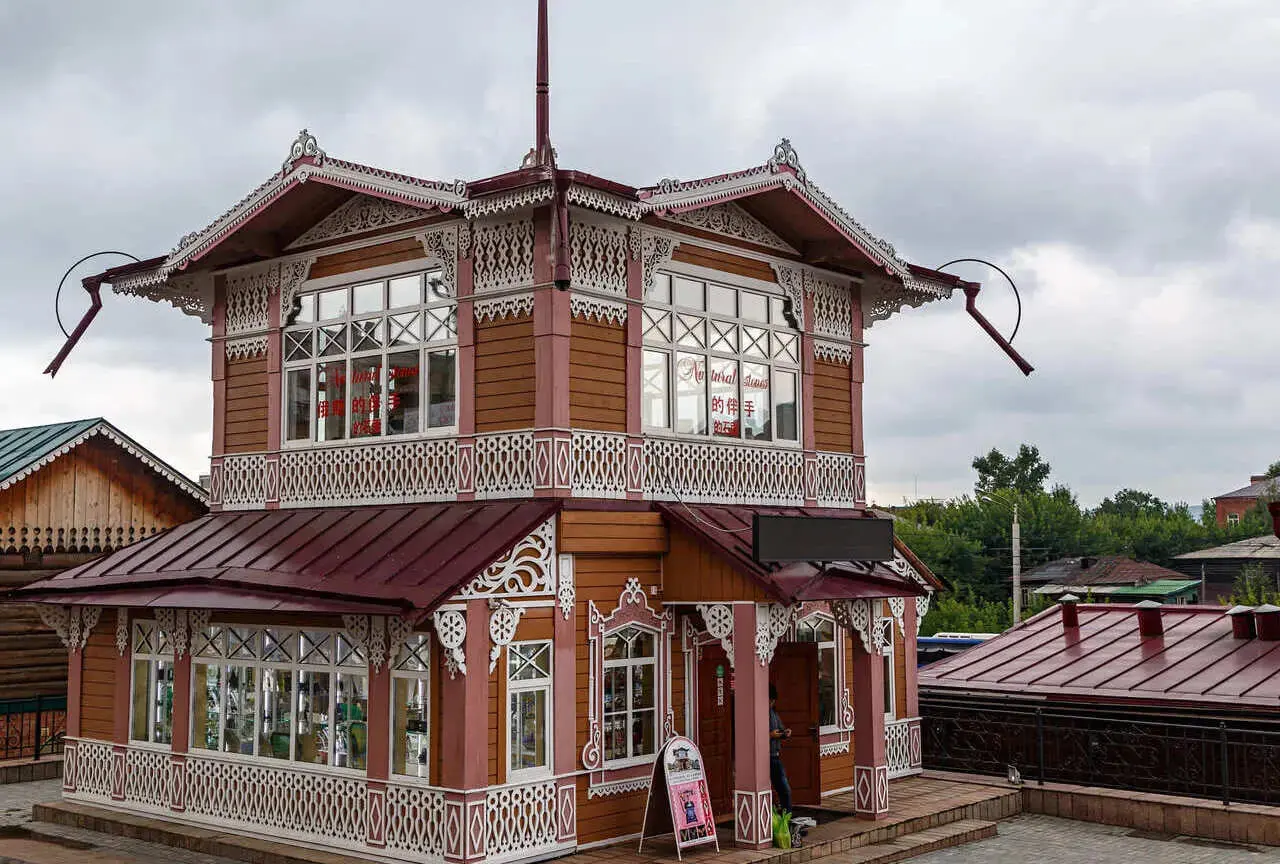
And if you want to soar and reach for the stars, then the Noosphere Museum and Planetarium, housed in an authentic historic building with a dome, is the place for you. It features an observatory with a telescope, an interactive museum, and a room showing films and cartoons about space, creating an immersive experience.
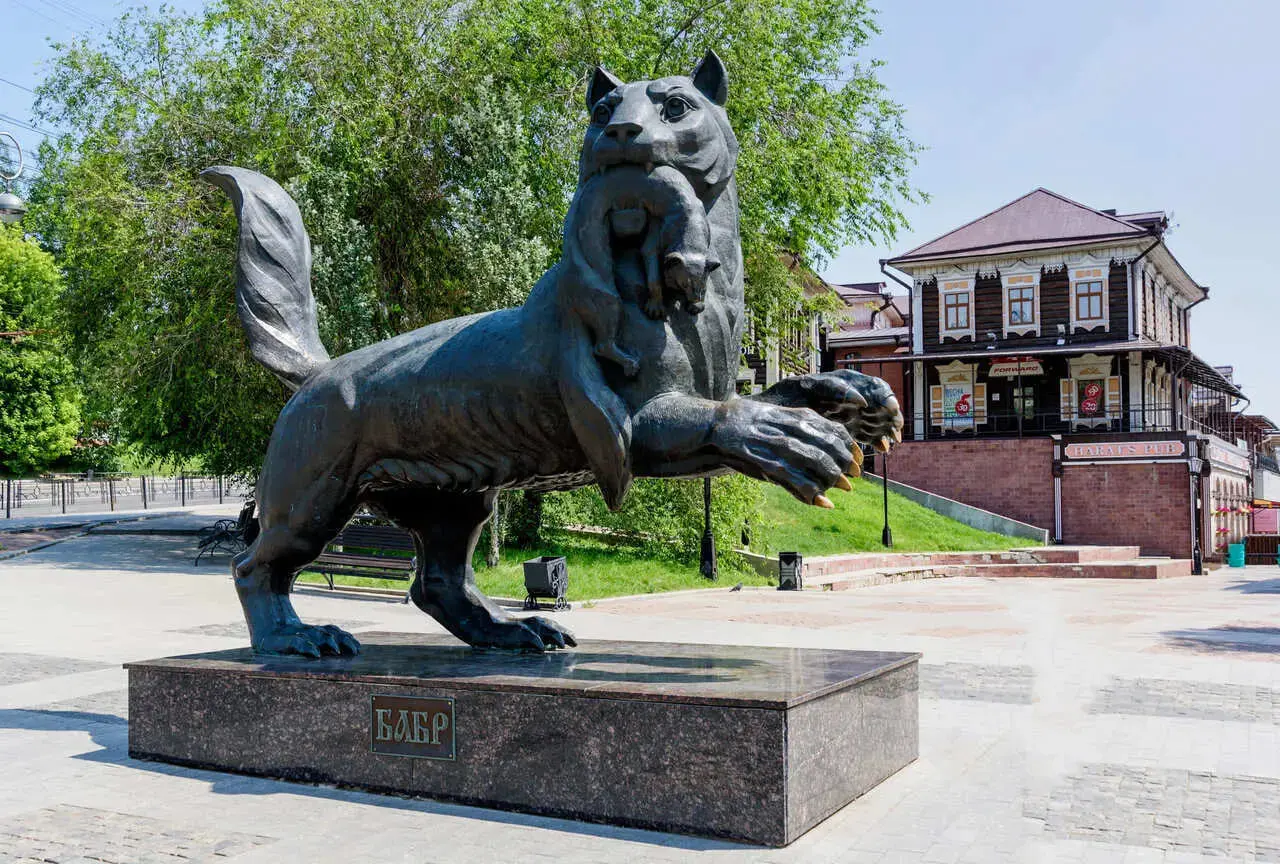
Among the neighborhood's attractions is a real dovecote. It was erected with public funds in 2016 to commemorate the 65th anniversary of the birth of playwright Vladimir Gurkin, whose play was the basis for the beloved film "Love and Doves." And, of course, we can't ignore the famous babr, whose sculpture is located closer to Timiryazev Street. The babr was once the name of the Ussuri tiger, an image of which originally adorned the Irkutsk coat of arms. In the 19th century, when the Russian coat of arms was reformed, the word was less well known, and the artist depicted a mythical beast, a hybrid of a beaver and a predatory cat, with a shaggy tail and webbed paws. Now the babr has become a unique symbol of Irkutsk and the region; you certainly won't find anything like it anywhere else.
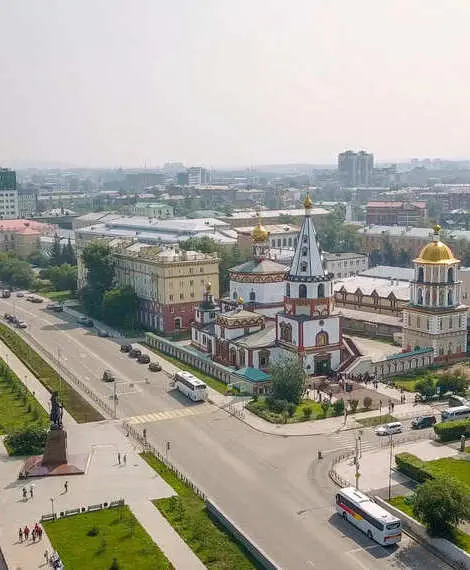
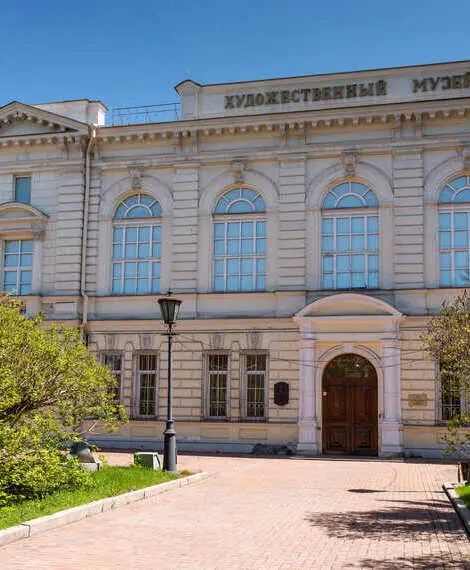
Walking around the city center, you can also visit the local history and art museums, take the scenic route from the Lower Embankment to Kirov Square, and see the icebreaker "Angara".